Project Title: Coordinated Social “Gün” Gathering
Background:
“Gün” is a long-standing tradition in Turkey where friends, neighbours, and relatives come together to socialize, share food, and create lasting bonds.
The Origins of GÜN: This tradition has roots in Turkish social customs as a way to build economic support networks. GÜN gatherings serve as informal “savings clubs,” an approach seen in many cultures worldwide. In Turkey, it has evolved particularly among women as a way to maintain close social ties while offering financial aid to each other in a structured but friendly environment.
Dynamics of Creating a GÜN Group: Members are often friends, relatives, or neighbours who join a rotating savings and credit association (ROSCA) setup, much like similar groups in cultures across Africa, Latin America, and Asia. They gather at each member’s home on a rotating basis to pool funds, which are given to one member each time, providing each participant with a substantial sum periodically.

Participation and Exclusivity: GÜN traditionally includes women, as they are seen as a safe, trusted space for sharing personal stories, exchanging advice, and strengthening social bonds. This exclusivity reinforces trust, a crucial element for the financial exchange involved. For example, my mother has a GÜN group with her high school friends.
Participant Limit: Practical limitations generally keep groups small, though this varies widely depending on the community and purpose of the group. Some GÜN groups might include only five to ten people, while others could be larger, depending on trust levels and logistical factors like hosting space. People have been known to borrow chairs from neighbours when they have a big GÜN group.
Host Selection: Hosting duties rotate among members, ensuring each has an equal role and opportunity to host and be celebrated in their home. The rotation fosters a sense of equality and accountability, as each participant knows their turn will come. Sometimes GÜN goers may have special occasions that disrupt the GÜN host list. In these cases, the GÜN group can grant them a chance to conduct the GÜN session they’re hosting later or sooner than planned.
Budget Decisions: For example, in a group of 10 participants, if each person contributes 1 gram of gold per “Gün,” you will visit the homes of the other 9 participants and give them a total of 9 grams of gold throughout the cycle. When it’s your turn to host, you receive 9 grams of gold from the others. While it may seem like everyone is giving and receiving the same amount, the key is that you gather a lump sum instantly when hosting, but you pay it back gradually over time. In this way, it serves as a method of saving.
Group members decide the contribution amount based on everyone’s financial capacity. This can also be influenced by the community’s economic status or specific group needs, providing flexibility and inclusivity. All participants agree on the contribution amount before each “Gün” cycle starts. Multiple bonds—both social and financial—help keep the group cohesive.
Frequency and Timing: While GÜN generally happens monthly, the interval can vary by group preference. The timing allows participants to plan around contributions, making it easier to manage financially. It’s also a way to maintain regular social contact, which is highly valued. To provide an example, my grandma’s GÜN happens bi-monthly but in the summer they have another round of GÜN that happens weekly because otherwise their GÜN group of 15 people cannot all host during summer.
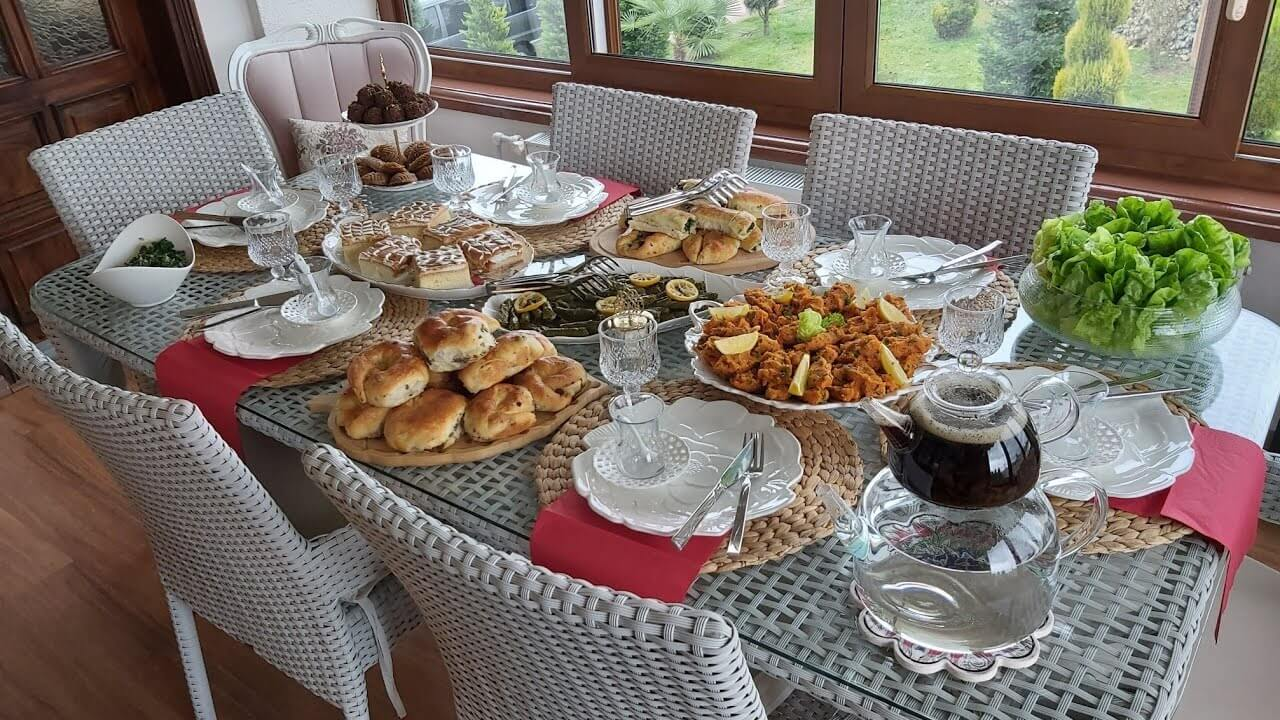
Decorations and Themes: Traditional gatherings may not require elaborate decor, but the host is free to arrange their home comfortably for guests. Some hosts may opt for decorations to add warmth or even centre a theme around cultural or seasonal events. Cultural decorations like laced tablecloths and matching dinnerware are often used.
Gift Giving: Hosts may offer small tokens or homemade food as gifts for attendees, as a gesture of appreciation. This adds a personal touch and enhances the sense of hospitality that is central to these gatherings.
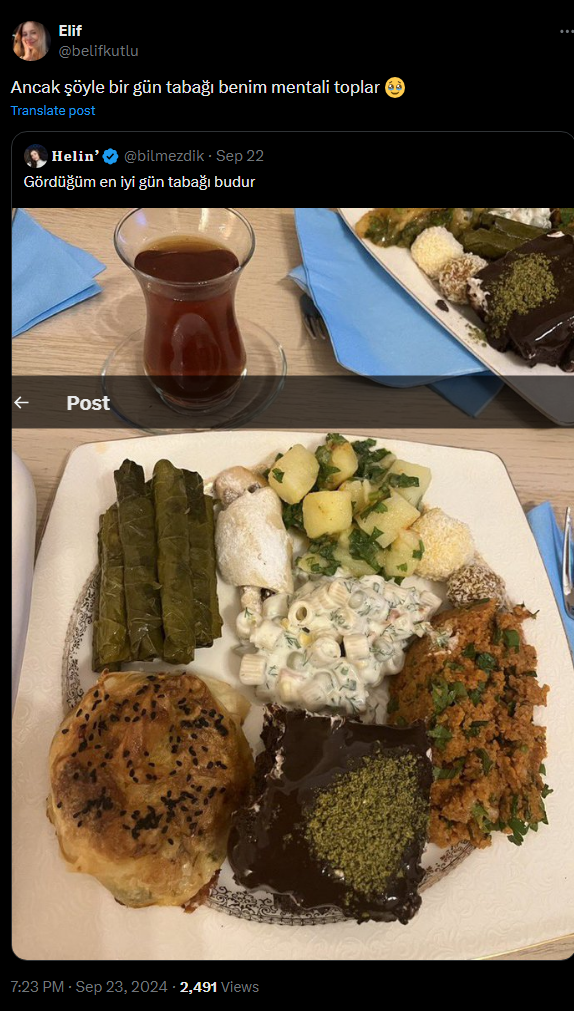
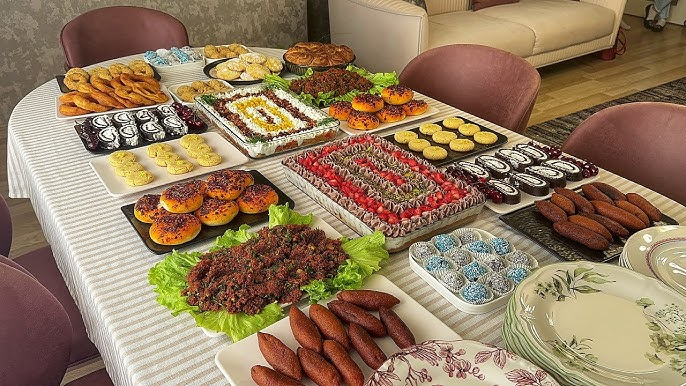
In a “Gün,” there is typically a large table overflowing with a variety of foods, pastries, cookies, snacks, and more. The table is often so full that additional tables are needed for food and serving. By the end of the event, everyone is so full that they can hardly breathe.
When it comes to preparing the food, there are different options that the participants decide on at the start of the cycle. One option is for the host to prepare all the food. Another option is for the host to prepare the main dishes while the guests bring additional foods. The choice depends on the dynamics of the “Gün” group.
Also, this often is one of the sole socialisation opportunities for the elderly to meet with people outside of their families. Some old people don’t wanna get out of their homes but in this “gün” event, they have to socialize and see other people. This project aims to structure and enhance the organisation of these events, making them more efficient and inclusive with support from different “Gün” groups.
Objective:
The goal is to create an organised system and/or product for planning “Gün” events, managing food responsibilities, and facilitating easy financial contributions (cash, gold, etc.) for the “Gün” component. Additionally, the project will explore the possibility of cross-support between different “Gün” groups to increase participation and engagement.
Key Elements:
- Location Management:
- Set specific rotation schedules for each participant’s home, ensuring a fair distribution of hosting duties.
- Integration of a location-based system where participants can confirm their availability and address logistics in advance.
- Meal Planning and Preparation:
- A detailed scheduling system will be developed, assigning specific meals or snacks (börek, cake, etc.) to each participant based on dietary preferences and cultural recipes.
- A shared documentation solution will track who is responsible for which dish to avoid repetition and ensure variety.
- Financial Contribution System:
- Introducing a seamless method for participants to contribute cash during each “Gün.”
- The platform will automate reminders for each participant when it’s their turn to receive the pooled contributions.
- Transparent tracking will allow participants to view contributions and ensure fairness.
- Different “Gün” Group Support:
- Some participants may have different “gün” groups and they may trying to manage different groups.
- They are collaborating with other “Gün” groups to create a support network that allows participants to attend or contribute to events in different groups.
- This system will increase the potential for larger gatherings, creating more robust social bonds across multiple communities.
Target Audience:
- Women aged 30-65, particularly those involved in traditional social groups (“Gün” groups), and those open to modernising the process through the use of digital tools for financial transactions.
- Keep in mind that as people get older, they tend to prefer physical solutions rather than digital systems/apps. Try to create a physical component that is more elderly-friendly (and therefore inclusive).
Your solution may include:
- A scheduling system for hosting and meal preparation.
- A secure, transparent, and user-friendly solution for handling/keeping track of financial transactions (cash, gold, etc.).
- Outreach and engagement plan to connect different “Gün” groups.
- A solution in case the Gün attendees have trouble finding the host houses, etc.
- Increased participation and collaboration between different “Gün” groups, fostering stronger community ties.
- Preventing confusion about who is hosting that “Gün”, where is their home, etc.
Budget for the project:
This scenario provides a holistic approach that integrates physical and digital elements for a comprehensive system. It includes scheduling, cross-group communication, and multi-group financial tracking, incorporating both an app and physical tools.
Estimated Budget: 21.000 – 30.000 €
| Item | Budget |
|---|---|
| Research & Testing | 1.000- 2.000 € |
| Product/UI Design | 4.000-5.000 € |
| App Development | 5.000-7.000 € |
| Physical Components | 7.000-10.000 € |
| Inter-Group Communication | 2.000-3.000 € |
| Educational Materials | 500-1.000 € |
| Maintenance & Support | 1.500-2.000 € |
Reseach&Testing: Mixed methods testing for digital and physical components.
Product/UI Design: Designing both physical aids and a complementary app for scheduling and tracking.
App Development (if exists): Developing a mobile app with multi-group coordination and tracking features.
Physical Components: Production of items like logbooks, schedule boards, or navigation aids.
Inter-Group Communication: Simple platform or directory for managing multiple “Gün” groups.
Educational Materials: Printed guides, video tutorials, and app instructions.
Maintenance&Support: Annual maintenance and support for digital components
Additional Info – Some foods from “Gün”
- Soup
- Pastries
- Mozaik cake
- Pogaca (with different fillings)
- Boreks
- Main food
- Salads
- Potato Salads
- Semizotu Salads
- Makarna Salatası
- Appetizers
- Kısır
- Yaprak Sarma
- Mercimek köftesi
- İçli Köfte
- Sigara Boreği (Spring Rolls)
- Beverages
- Çay
- Turkish Coffee
- Cookies
- Un kurabiyesi
- Kakoulu Islak Kurabiye
- Elmalı kurabiye
- Desserts
- Trileçe
- Baklava
Extra1: Here is a video about “Gün” foods. It is a king of advertisement but the beginning part may be valuable to understand “Gün” foods.
https://www.instagram.com/reel/DAoCaSJoT51/?igsh=YjBvMzVuaDc0dWlq
Extra2: A study about “Gün” (sorry for Turkish source)
Extra3: A folkloric approach to traditional “Gün”, “example of Muğla” / An article (sorry for Turkish source)
Extra4: Also there is a powerful impact of “gün” in people’s mental. This is a joke but sometimes all of us want a “gün tabağı”( a plate full of gün foods).