
1.Project Overview and Background:
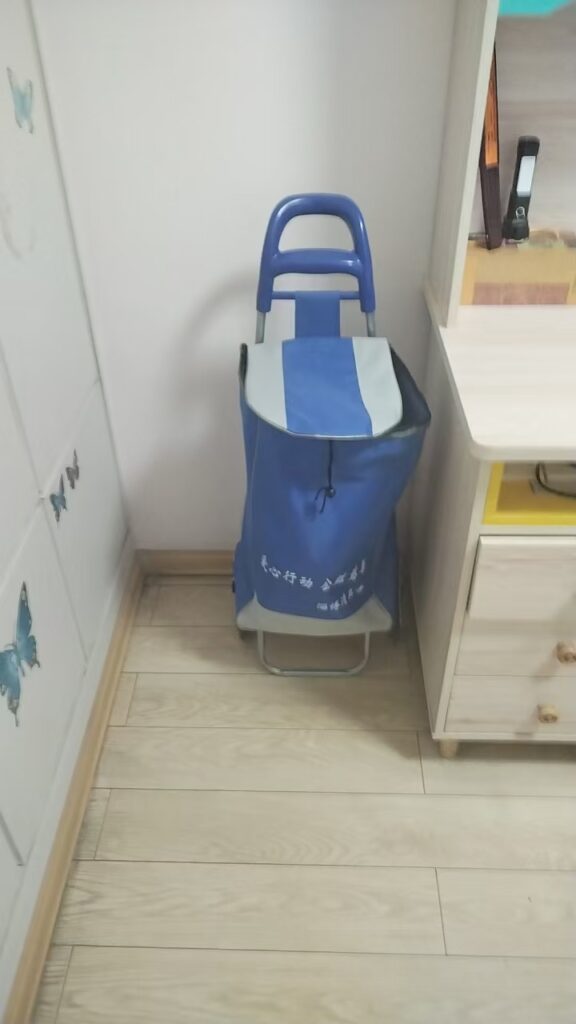

With the intensification of the aging society, the shopping needs of the elderly are becoming more and more concerned. However, the existing household portable trolley has some inconveniences in use, such as carrying too many things and is not easy to carry and move, inconvenient storage of items, and lack of design for the physical characteristics of the elderly. This project aims to design a convenient, comfortable, safe and suitable shopping cart for the elderly, so that their shopping behavior is more convenient and comfortable.
2.Target Market :
This program is mainly aimed at seniors over 60 years of age, especially those who pay attention to shopping convenience and may have a little physical activity but still maintain some independent shopping ability. At the same time, the potential market demand of some middle-aged people who are frail or have special shopping needs is also taken into account.
3、Target cost retail cost:
Considering the consumption characteristics of the elderly and the product quality requirements, the retail price of the convenient shopping cart is controlled in the range of 100-300 yuan (14.0–42.2 US dollars) and does not exceed 400 yuan (56.3 US dollars)
4、Timetable:
1. Feedback: Communicate with potential users, relevant experts, etc., to gain an in-depth understanding of the problems and needs encountered by the elderly in the shopping process. (Deadline: October 27)
2. Concept generation and evaluation: Based on the information gathered, the team brainstorms the design concept internally, and conducts debriefing and further communication with stakeholders to evaluate the feasibility and practicability of the concept. (Deadline: November 3)
3. Product design: complete the overall design of the product, including appearance design, structural design, functional design, etc., and make a preliminary design model or drawing. (Deadline: November 20)
4. Feedback and optimization: Show the design results to some elderly people, collect their feedback, carry out targeted optimization and adjustment, and form the final design plan. (Deadline: December 1)
5. Design Proposal Formation Process:
The client team will be actively involved in all phases of the project, providing practical information and advice on the shopping habits, needs and preferences of the elderly. Objective evaluation and feedback on the design plan will work together to drive the project smoothly and ensure that the final product can effectively meet the needs of the elderly.
6. Project design strategy:
1. Humanized design: fully consider the physical characteristics and usage habits of the elderly, such as vehicle height, handle design, etc., to ensure the comfort of the household trolley, and the use and movement are convenient and easy.
2. Quality assurance: The selection of high-quality materials ensures that the structure of the household trolley is stable and durable, and can carry a certain weight of items.
3. Ease of use design: the operation is simple and easy to understand, such as braking device, cart mode and other designs should meet the operation ability of the elderly.
4. Safety design: The safety factors of the elderly are fully considered in the design, and possible potential safety hazards are avoided, such as the stability of the wheels and the anti-skid treatment of the body.
5. Versatile: In addition to the basic shopping and carrying functions, you can also consider adding some practical functions, such as seat design that is convenient for the elderly to rest, classified storage space, etc.
6. Cost-effective: On the premise of ensuring product quality and function, control costs by optimizing design and supply chain management to provide cost-effective products.
7. Sustainable development: Pay attention to the environmental protection of products, choose recyclable or environmentally friendly materials, and reduce the impact on the environment.
7. Functional aspects:
1. Easy to push and operate: The ergonomically designed handle is comfortable to hold and easy for the elderly to exert force. The flexible and stable wheels ensure that the domestic trolley can be easily pushed and rotated flexibly in different ground conditions. It is equipped with a braking device to facilitate the elderly to stop at any time when needed, such as moving up and down slopes to ensure the stability of the shopping cart and prevent skidding.
2. Storage and sorting of items: Set up multiple storage spaces of different sizes to facilitate the elderly to store different types of items, such as food and daily necessities, to avoid squeezing each other and fighting. Consider designing small storage bins with lids or fixtures for items that roll off easily or are fragile. A large space can be designed at the bottom of the cart to store larger or heavier items without affecting the overall stability of the small domestic trolley.
3. Easy to find items: Consider designing a small storage box that can be folded or detached so that the elderly can store frequently used items so that they can easily access and view them at any time.
8. Ease of use:
1. Simple opening and closing design: The opening and closing of the household trolley should be simple and convenient, and the elderly can easily complete it. For example, it can be opened and closed with a one-touch design, or quickly opened and closed using a simple mechanical mechanism. The design of the foldable household trolley is convenient for the elderly to store when not in use, saving space. The folding method should be easy to operate, preferably with one hand, for ease of handling. The folded size should be small for easy storage.
2. Clear signs and reminders: Paste obvious signs and operating instructions on the key parts of the household trolley, such as brake devices, folding buttons, etc., and use simple and easy-to-understand icons and text so that the elderly can quickly understand and operate. Consider setting up a small display or indicator light on the handle of your home trolley to indicate some status information about the cart, such as battery level (if it’s an electric cart), whether the storage space is full, etc.
3. Easy to carry and store items: Design some hooks or bags on the side or back of the home trolley so that seniors can hang their handbags, umbrellas, and other items on it, leaving their hands free. The handle of the shopping cart can be designed in the form of height adjustment to adapt to the use of elderly people of different heights and improve the comfort of use.
9. Adapt to everyday life.
1. Mobility considerations: Consider that the elderly don’t mind some light exercise, and they often go to some distant places to buy items because of the price of the items. And after the purchase, go to some places for daily entertainment. For example, going to the park to exercise, going for a walk, watching other people play board games. Portable trolleys can be designed to be lighter and more flexible, making them easy to use in these scenarios. You can add some shock absorbers to the bottom of your home portable trolley to reduce vibration when walking on uneven roads, improve comfort, and also protect the contents of the shopping cart.
2. Food and beverage shopping needs: For the needs of buying food, the household portable trolley can be designed with some special functions, such as heat preservation and freshness preservation functions. For example, an insulation layer is set up in a certain part of the household portable trolley to place food that needs to be maintained at a certain temperature, such as cooked food, frozen food, etc. Considering that the elderly may buy some bulk food, the household portable trolley can be equipped with some small containers or bags to facilitate them to store and carry the bulk food separately.
3. Precautions in line with habits: For example, a stand can be set up on the home portable trolley to place water cups, so that the elderly can drink water at any time during the shopping process, especially when participating in shopping activities organized by some elderly centers, so that they can use it when communicating with other elderly people.
10. Customer preferences and needs:
1. Design: The overall style tends to be simple and steady, avoiding overly fancy or complicated designs. You can choose some classic, easy-to-match colors, such as black, white, silver, etc., or you can add some bright but not dazzling colors according to market research, such as light blue, light green, etc., to increase the attractiveness of the product.
The appearance of the household portable trolley should be smooth, avoid sharp corners or protrusions, and prevent scratching the elderly or other people.
2.Functional requirements: In addition to the above basic functions, some seniors may want the household portable trolley to have some additional functions, such as lighting function (for low-light environment), metering function (can simply measure the weight or volume of purchased items), etc., which can be selectively designed according to cost and actual needs.
For the elderly who want to go out shopping, the most important point is that it needs to have a power assist function that is convenient for the elderly to use and move. Electric power boosters, for example, can help them push the family trolley more easily. However, care needs to be taken to control the speed and force of the power assist to ensure safety.
3. Quality and durability: Older people are more concerned about the quality and durability of products, so they must be strict when choosing materials and structural design. The frame can be made of high-strength aluminum alloy or high-quality plastic, ensuring sturdy durability and moderate weight.
The wheels should be made of wear-resistant, non-slip materials and have good shock absorption properties. The components of a small household trolley need to be strong and reliable, stable after many uses and folding.
4. Price sensitivity: Most seniors tend to buy low- to medium-priced products, so cost control should be fully considered in the design process to provide cost-effective family trolleys. At the same time, however, it is necessary to ensure that the quality and functionality of the product are not compromised, and to reduce costs by optimizing the production process and selecting materials rationally.
In terms of product pricing, versions with different configurations and features can be offered to meet the needs and budgets of different seniors. For example, the basic version is cheaper and has basic features for a small family cart; The premium version adds some additional features and is relatively expensive, allowing seniors to choose according to their actual situation.
11. Customer preferences and needs:
My mom’s dad.
From what I have observed, my maternal grandparents used to go out together to buy groceries and food, when their smartphones were not that advanced and they were not skilled at using them to buy things. The purchase of everyday items is not the main thing. They often come to invite us to dinner as organizers and organizers of family gatherings, so they need to buy a lot of food. After all, there are indeed quite a few people in our family. This poses a problem, as large quantities and heavy food can be difficult to carry and move.


As my grandfather got older, although he was still healthy enough to go out for a walk, the small family cart he used was simple and difficult to operate. And the supermarkets and markets he goes to tend to be far away from his home. According to my research, it takes him 4 or 5 kilometers to get to these places. If he were to take the bus, it would take him half an hour. Although it may not sound like a very difficult journey, it is difficult for an elderly man who is dragging many and heavy items. What’s more, as a Hui who believes in Islam, he often needs to buy beef and mutton. For the freshness and taste of the meat, he needs to go further afield to buy it.
So when he went out shopping, my family and I were still worried. My grandfather may have back pain and other conditions due to dragging heavy objects. Therefore, I wish he could have a small family trolley that can hold a lot of things but is not too difficult to move. At least moving it upstairs won’t be too tiring.
In fact, the phenomenon of the elderly going out to buy groceries is quite common in China. They are not very proficient in using their phones to buy items. And China’s morning markets have the freshest and cheapest vegetables. We often see elderly people pulling their simple household carts, sitting on buses, and walking down the street. Therefore, I hope to have such a convenient product to help them reduce their burden and pay attention to their health.
12. Market Research:
- Analysis by Price
Mid-to-high-end products:
Household portable trolleys priced in the range of 200-300 yuan (28.1–42.2 dollars) usually have better design and functionality. For example, using better quality materials for body and wheels has a more stylish and beautiful exterior design, and may have some smart features, such as auto-following, etc.
The brand awareness of this kind of household portable trolley is relatively high, and the product quality and after-sales service are guaranteed, which is suitable for the elderly who have high quality requirements for household portable trolleys and relatively sufficient budgets.
Low-end products:
Household portable carts priced at 100-200 yuan ($14.0-28.1) are the mainstream of the market. They usually have basic home portable trolley functions such as storage, pushing, etc., but may be relatively simple in terms of materials and processes. The exterior design may be more ordinary, but there will be a variety of colors and styles to choose from. This type of shopping cart is suitable for the consumption needs of most ordinary elderly people, and it is also relatively cost-effective.
Household portable trolley with a price of less than 100 yuan (less than $14.0) is a low-end product, with relatively simple functions and relatively rough materials and workmanship, and some problems may occur during use, such as inflexible wheels and easy damage to the fuselage. But it can be an option for some seniors who are very price-sensitive and only occasionally use a small family car.
- Analysis of related products with special functions:
Sit-down shopping cart :
Problem solving: It mainly solves the problem that the elderly are easily fatigued during the shopping process, and provides a function that can sit down and rest at any time.
Functional structure: The shopping cart is designed with a foldable or retractable seat, which is made of comfortable material and has a certain load-bearing capacity. The position and angle of the seat should be reasonable to ensure that the elderly are comfortable and safe when they sit down, and do not interfere with the normal use of the shopping cart.
Average price range: The price of a seatable shopping cart is relatively high, generally around 150–350 yuan (21.1–48.3 USD), depending on factors such as the design and material of the seat, the overall quality of the shopping cart, and so on.
- Basket & Cart :
Functional structure: The body design of the shopping cart can be deformed, and the shopping cart can be turned into a shopping basket through some simple folding or disassembly operations. The handle of the shopping basket should be designed to be comfortable and sturdy for the elderly to carry.
Solution effect: The elderly can directly use the shopping basket when buying a small number of items, avoiding the inconvenience of pushing a larger shopping cart; When you buy a large number of items, you can turn them back into a shopping cart, making shopping more efficient and convenient.
Average price range: The price of this dual-purpose shopping cart is generally between 120– 250 RMB (16.8–34.8 USD), and the price difference depends mainly on the quality of the product and the complexity of the deformation design.
[…] Hello Design Team 18, when are you planning to upload your individual initial Design Concepts addressing your Clients’ Project Brief https://theglobalstudio.eu/2024-18/2024/10/28/convenient-shopping-cart-design-outline-updating/ […]