Design background
With the development of urbanization, more and more young people choose to live in cities, while an increasing number of elderly individuals live alone in rural areas. Their frail bodies often cause various inconveniences in daily life, such as difficulty walking due to weak legs during travel, forgetting to take medication in their daily routines, or adding too much seasoning while cooking.

Congee, a traditional Chinese food.
1. Daily Diet
In terms of physical health, the first point is that the teeth of the elderly are not strong, and they prefer to eat soft foods, such as steamed buns and noodles. Secondly, most elderly people prefer hot food because raw or cold food can be a burden on their stomachs. At the same time, to avoid issues like high blood sugar, high blood pressure, and high cholesterol, many elderly people cannot consume excessive amounts of high-fat, high-salt, and high-sugar foods, so they opt for a light diet.
In terms of culture, the first point is that Chinese elderly people focus on health preservation. In their leisure time, they will brew a cup of healthy tea, which is usually made from one or more herbs that have been simply processed, such as drying or roasting. Drinking these teas is beneficial for maintaining their health, such as for the cardiovascular system, stomach, liver, etc. Additionally, they have the habit of eating while drinking hot porridge because Chinese people believe that consuming hot porridge has the effect of nourishing the stomach.

From left to right are the iron fork, wooden spatula, wooden fork, and broom.
2. daily necessities
In rural areas, many elderly people between the ages of 60 and 70 are still farming. This is because Chinese farmers have a special emotional attachment to the land since ancient times. They will wake up at six in the morning to do farm work in the fields, so the vast majority of rural elderly people cannot do without household items such as agricultural tools (rakes, shovels, hoes, sickles, buckets, etc.). In addition, they also cannot do without reading glasses, crutches, wheelchairs, and so on.

Elderly people in China are dancing in the square.
3. Daily Activities
The living habits of elderly people in China vary by region and individual circumstances, but they can generally be summarized as follows:
1. Self sufficiency: Many elderly people in rural areas still maintain their traditional farming lifestyle, growing food crops, vegetables, and fruits on their own land, as well as raising poultry and livestock.
2. Community interaction: Elderly people in rural areas usually have close relationships with their neighbors, and they enjoy chatting, playing cards, or participating in collective activities in the village during their leisure time. The same applies to elderly people in urban areas, who also prefer to travel outside. The activities mentioned above not only enrich their spiritual life, but also help alleviate feelings of loneliness.
The issues we have identified
China has a rich diet culture and a large number of cuisines since ancient times, which means that Chinese people will store a variety of spices in their kitchens, but the environment for storing spices is different. For example, soy sauce and vinegar should be stored in a cool and dry place to avoid direct sunlight. It is best to seal and store soy sauce and vinegar after opening the bottle to prevent bacterial contamination in the air, which can affect taste and quality. Fermented seasonings such as Douban sauce and sweet bean sauce contain high levels of salt and moisture, making them prone to spoilage. After opening, it should be stored in the refrigerator to slow down the growth rate of microorganisms. Dried spices such as Sichuan peppercorns, star anise, and cinnamon are suitable for storage in well ventilated and dry places to avoid mold growth caused by moisture. Before use, ensure that the container is clean and free of water to prevent the introduction of moisture. Sesame oil, peanut oil and other vegetable oils should be stored in a dark and low-temperature place to prevent oxidation and odor. Use it as quickly as possible after opening. Seafood extracts such as fish sauce and oyster sauce contain high protein content and are prone to spoilage. After opening the bottle, it needs to be sealed and refrigerated for storage. Elderly people are very prone to neglecting the amount of these seasonings when cooking, forgetting to put them back in place after use, or neglecting whether these seasonings have spoiled. We need a design plan that can help elderly people manage, store, and easily use these seasonings.
Existing products
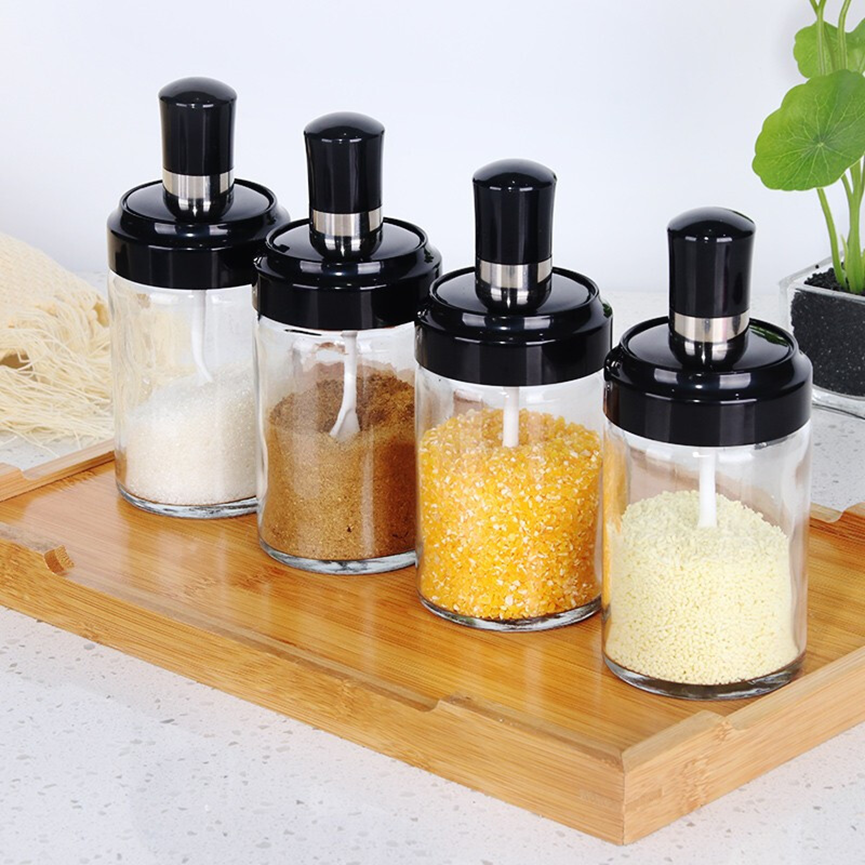
Seasoning jar
1. Bottle cap difficult to open: Many spice jars are designed with tight bottle caps that require a lot of force to unscrew, which is a challenge for elderly people with weakened hand strength or diseases such as arthritis.
2. Unreasonable bottle mouth design: Some seasoning jars have bottle mouths that are too large or too small, which can lead to excessive leakage of seasonings and make it difficult to control the amount used; If it is too small, it may cause the seasoning to be difficult to pour out, especially for viscous sauces that require strong squeezing, which is not very friendly to the elderly.
3. Unclear labels and markings: The label text or markings on some seasoning jars are not clear enough, which affects the reading of elderly people, especially those with poor vision, who may not be able to accurately determine the remaining amount of seasoning or use it correctly.
4. Material selection: Some heavier glass or ceramic seasoning jars are inconvenient for elderly people to transport, while plastic products, although lightweight, may also increase the difficulty of unscrewing bottle caps if the material is too hard.
Seasoning box

1. Difficulty in opening and closing: Many spice boxes have tightly designed lids that require a certain degree of finger flexibility and grip strength to open or close, which may be a major challenge for elderly people with insufficient hand strength or limited joint mobility.
2. Unclear labeling: If the font size or color contrast of the label or label on the seasoning box is too small, it will be difficult for elderly people with reduced vision to recognize it, thereby affecting their ability to choose the correct seasoning they need.
3. Disorderly arrangement: Some seasoning boxes on the market do not have clear classification and sorting designs, which may confuse elderly people with memory loss or cognitive decline when searching for specific seasonings.
4. Difficult to clean: The design of some seasoning boxes makes it difficult to clean the inside, especially those with complex structures or fine seams, which can easily accumulate dirt and bring trouble to elderly people who pay attention to hygiene.
5. Poor moisture resistance: For seasonings that need to be kept dry (such as salt, sugar, etc.), if the sealing of the seasoning box is not good, it is easy to get damp and clump, affecting the quality and taste of the seasonings.
Design requirement
1. There should be a lid that is easy to open or close
2. The sealing ability can meet the storage conditions
3. Clear markings or larger buttons
4. Easy to clean, detachable parts that can be thoroughly cleaned
5. Design multiple module components that can meet as many storage and adjustment requirements as possible
6. Built in or attached measuring tools, convenient for the elderly to accurately access seasonings
7. There is a good isolation between various seasonings to prevent cross contamination
Reference price
20CNY~3500 CNY
(2.5758EUR~450.765 EUR)
Pingback: Design Team 07 Design Concepts – Design Team 07 | The 2024 Global Studio