Based on the basic requirements in the first version of the client brief, we have further refined the brief.
We will provide you with design ideas from the following aspects:
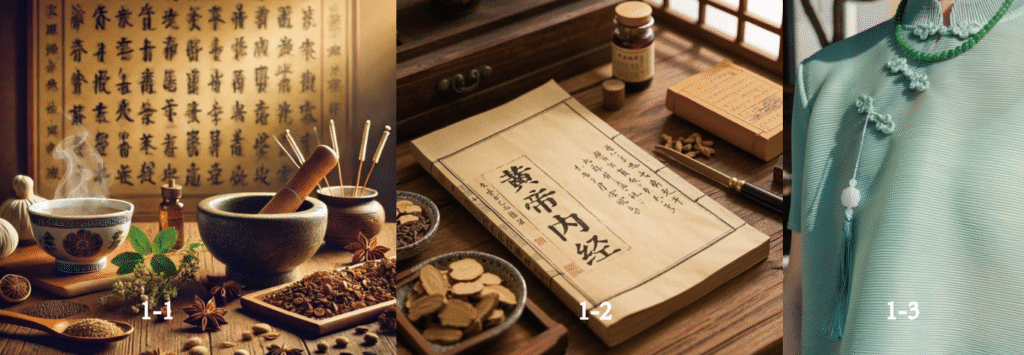
1-1 Chinese Elderly Prefer TCM-based Body Regulation (They are psychologically more receptive to Traditional Chinese Medicine than Western medicine treatment, and usually maintain health and regulate their bodies through TCM methods in daily life.)
1-2 Early Chinese Health Preservation Books
1-3 Traditional Chinese Clothing Preferred by Chinese Elderly
This is a part of the TCM health preservation content we have organized. You can download it for further understanding if you are interested.
There are various methods of Traditional Chinese Medicine (TCM) health preservation. For our design requirements, we intend to incorporate TCM materials into products, such as TCM sachets or combined fragrance combs.
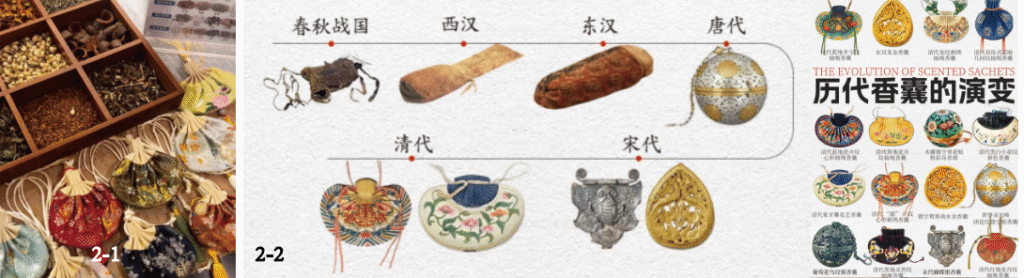
2-1 TCM Sachet 中药香囊 Made of dried Chinese medicinal materials with aromatic properties.
Sachet Formula: Health Preservation Basis from Ancient Classics .
Common ingredients include Peilan (Eupatorium fortunei),Huoxiang (Agastache rugosa), Bohe (Mentha haplocalyx), Muxiang (Aucklandialappa) and Aiye (Artemisia argyi). These ingredients have the effects of repelling insects, refreshing the mind, and regulating Qi. It can be hung in the bedroom, living room or carried with you. For the elderly, sachets with Aiye and Cangzhu (Atractylodes lancea) can warm the meridians and dispel cold; for office workers,sachets with Peilan and Bohe can relieve fatigue and refresh the mind.
2-2 Forms of Sachets in Successive Dynasties of China 中国历代香囊样式
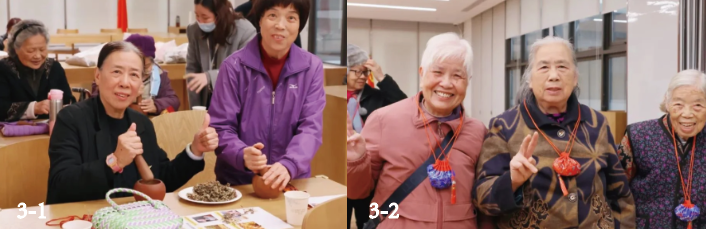
3-1 The Process of the Elderly Making Sachets
3-2 Sachet Display
We hope that our medicine box product can be worn by the elderly like a sachet without making them feel it is a medical product. At the same time, we expect it to emit the scent of traditional Chinese medicine like a sachet, so as to achieve some therapeutic effects such as calming the mind and soothing the nerves.

4-1 Production and Raw Materials of Combined Fragrance Comb
4-2 Combined Fragrance Comb
A comb made by mixing aromatic Chinese medicinal materials (such as sandalwood, agarwood, Chuanxiong (Ligusticum chuanxiong), Baizhi (Angelica dahurica)) with natural materials (such as boxwood, jujube wood). When combing the hair, the aroma of the medicinal materials is released, which can stimulate the acupoints on the head (such as Baihui, Fengchi)and promote head blood circulation. It has the effects of improving sleep, relieving headache and nourishing hair. It is recommended to comb the hair 1-2 times a day, 5-10 minutes each time, combing from the front hairline to the back of the head.
Regarding how to emit the scent of traditional Chinese medicine (TCM), you can integrate your own ideas. Here is an example of a combined fragrance comb: it achieves the integration of TCM and the comb by changing the comb’s material—grinding TCM into fragrant paste and then shaping it into a comb using a mold. We hope this example can bring you some new inspirations.
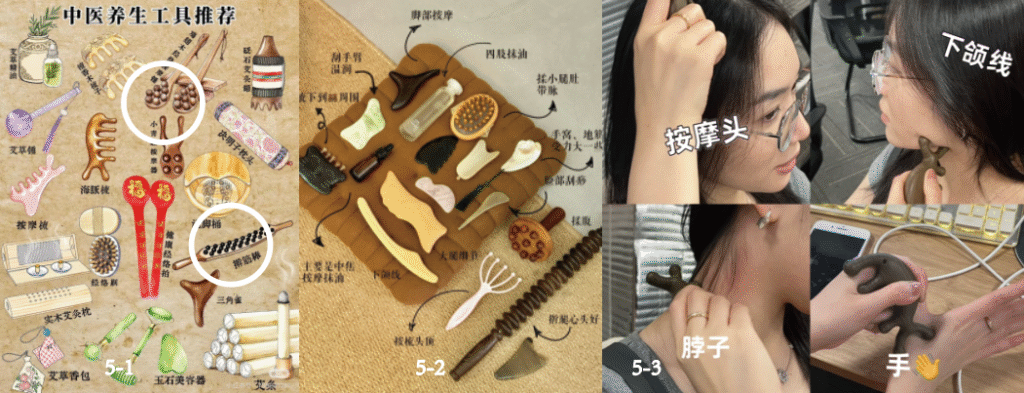
5-1 and 5-2 are both some massage tools. We hope to add health-preserving gadgets familiar to the elderly to the medicine box, so that the medicine box can not only hold medicine but also serve daily health preservation, thereby increasing the frequency of use (the more frequently it is used, the less likely it is to forget to take medicine). Some elderly people like “pressing acupoints”. We can make mini acupoint massage bumps on the side of the medicine box (corresponding to Hegu acupoint and Neiguan acupoint, made of soft rubber), so that they can be pressed and kneaded conveniently every time when taking medicine.
5-3 shows the usage scenarios of some small massage tools.
Every time the elderly take medicine, they can massage these acupoints by the way, realizing the dual functions of “medicine storage + health care”.
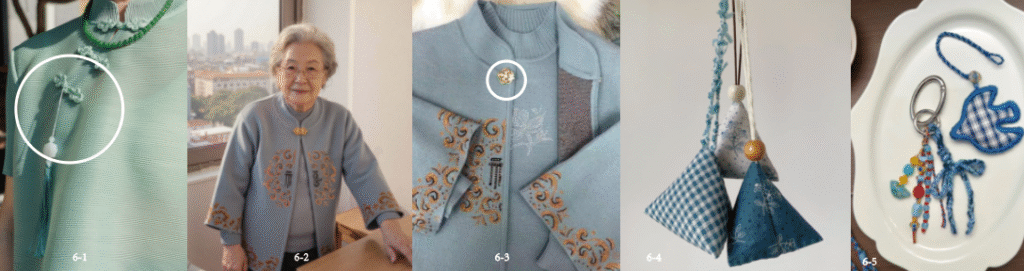
6-1 6-2 6-3 Some elements often appearing in the elderly’s clothing, such as Chinese-style frog buttons and certain patterns.
6-4 6-5 Some sachets with simple designs in China currently
The elderly’s preferences for clothing (such as color, material, and pattern) are often long-standing habits. We hope this medicine box can integrate with their clothing from three aspects: “visual matching”, “material adaptation”, and “wearing method”, and even become a “practical accessory” of the clothing, so as to reduce the sense of abruptness when “carrying medicine out”. At the same time, combining the above content, we also hope that the elderly can strengthen the memory point through sensory linkage.

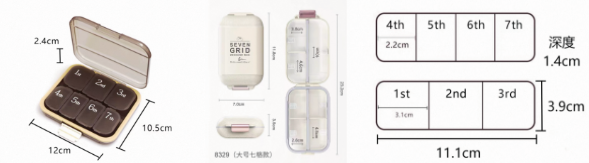
The above are common medicine boxes with a size of about 10cm-15cm. To facilitate carrying, the medicine box can be designed to be more portable with a smaller and more flexible size.
Thank you, Zitong. This is very interesting and truly helpful. I find all these natural solutions and the variety of fragrances fascinating — it’s like discovering a whole new world. I really appreciate how Traditional Chinese Medicine integrates natural materials with design to promote well-being.
I’m truly delighted to hear you’re interested in these natural remedies and fragrances — and sincerely glad they’ve opened a door to a “whole new little world” for you! TCM-based fragrances have a wide range of applications in China and are especially beloved by middle-aged and elderly people. I hope this can bring you inspiration and ideas for your designs. If you’re willing, could you share more of your design proposals with me? I’m really looking forward to seeing how you’ll perfectly integrate these elements.